Should You Remove Storm-Damaged Limbs Yourself or Hire a Pro?
Shawn
|
October 30, 2026
Table Of Contents
After a severe storm, the first thing most homeowners notice is the mess: snapped branches across the lawn, a cracked limb hanging over the driveway, or a heavy bough resting on the fence. The natural question is whether to grab a chainsaw or call someone. The short answer is that small branches already lying on the ground, away from power lines and structures, can often be cleared by a homeowner with the right gear. Any limb that is hanging, high up, thick, touching a building, or near a utility line should go to a professional. Limb removal after a storm is riskier than it looks, so it helps to know how to judge each situation before you start cutting.
What Counts as Storm-Damaged Limbs?
Storm-damaged limbs are branches that have been broken, split, bent, or loosened by high wind, heavy rain, ice, lightning, or flooding. Some are obvious, like a large branch lying across the yard. Others are harder to spot. A limb can crack where it joins the trunk and stay in place, held up only by bark and a few strands of wood. A branch can also bend under the weight of wet leaves and never return to its original position. These partially detached branches are often more dangerous than the ones that fell, because they can drop without warning days or even weeks after the storm.
Walk your property slowly after the weather clears and look up as well as down. Check over the roof, driveway, play areas, parking spots, and any walkway your family uses. Making a mental list of what has fallen and what is still hanging gives you a clear picture of whether this is a quick cleanup or a job for trained tree crews.
Why Storm Damage Tree Cleanup Is Riskier Than It Looks
Wood that has been bent or broken by a storm is under heavy tension. When a saw cuts through it, the limb can snap, spring, or roll in ways that are difficult to predict. A branch pinned under another branch or leaning on a fence can swing violently the moment the pressure is released. Even experienced homeowners can be caught off guard by this.
Chainsaws add their own danger. Kickback, slippery footing on wet ground, and awkward angles when cutting above shoulder height are common causes of serious injuries after storms. Working from a ladder with a running saw is especially hazardous. Falling debris, flying chips, and fatigue from hauling heavy wood also play a part, which is why proper protective gear such as a helmet, eye and ear protection, chainsaw chaps, gloves, and sturdy boots is the minimum for any cutting job.
The most serious hazard is electricity. A limb that is touching or leaning on a power line may be energized, and so can the tree it came from. Never touch, move, or cut anything in contact with or close to a utility line. Call your utility company first and keep people and pets well away from the area. This is one situation where waiting for a professional is the only safe choice.
Hazardous Tree Limbs: Warning Signs to Watch For
Not every damaged branch needs immediate action, but some hazardous tree limbs should be treated as urgent. A limb that is hanging by a thread of bark, often called a widowmaker, can fall at any time and should be cleared by someone with the proper equipment. Large cracks or splits where a branch meets the trunk suggest the connection is failing. Branches that now hang over a roof, driveway, vehicle, or play area create a clear risk to people and property.
Other warning signs include a tree that has started to lean after the storm, fresh soil heaving up around the roots, large sections of missing bark, and mushrooms or fungus growing near the base or along a limb. Leaves that turn brown or fall early outside of normal seasonal changes can also point to deeper damage or decay. If you see more than one of these signs, the problem may extend beyond a single branch, and a professional assessment is worth the call.
When You Can Handle Limb Removal Yourself
Some storm cleanup is reasonable to do on your own. If a branch is small, say a few inches thick, has fully fallen to the ground, and is not touching a power line, structure, or another tree, a hand saw, pruning loppers, or a pole saw may be all you need. Light branches can also be broken down into smaller pieces and bundled for yard waste pickup.
Even then, a few rules keep the job safe. Work during daylight, wear proper protective gear, and have another person nearby in case of an emergency. Cut from the ground whenever you can and avoid climbing into a tree or onto a ladder with power equipment. Check the ground for hidden hazards such as nails, fence wire, or holes created by shifting soil. If at any point the branch moves unexpectedly, feels under tension, or turns out to be heavier than expected, stop and reassess instead of pushing on.
When to Hire a Professional for Limb Removal
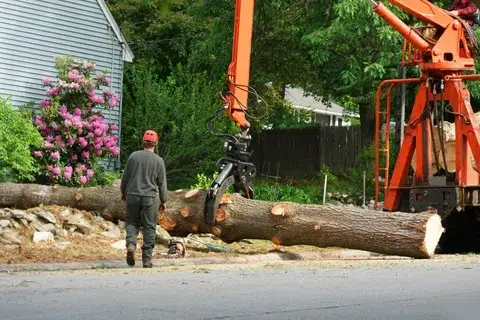
Professional limb removal is the better choice whenever the risk, size, or location of the damage goes beyond simple ground-level cleanup. You should call a pro when a limb is thick and heavy, when it is more than a few feet off the ground, when it is hanging in the canopy, or when it is resting against a house, roof, fence, or another tree. Anything near power lines, service drops, or cable lines also belongs in a professional’s hands.
Trained crews bring equipment homeowners do not usually own, including compact tool carriers, heavy-duty saws, rigging, and chippers. They also understand how to plan each cut so the limb falls where it should, and how to relieve tension in a damaged branch safely. Beyond safety, hiring a pro protects your property. A poorly cut limb can tear bark down the trunk, leave a wound that invites disease, or crash through a fence, gutter, or window. Professionals use proper pruning cuts that help the tree heal, which matters if you hope to keep the tree for years to come.
Dead Limb Removal: Why Waiting Costs More
Dead limbs are not only a storm issue. Deadwood is brittle, and it breaks far more easily than healthy wood, even in moderate wind. A storm can finish the job on weak branches that were already dying, and any that remain afterward are likely to fall during the next round of weather. Dead limb removal is one of the most cost-effective ways to prevent property damage and injuries.
Signs of dead wood include branches with no leaves during the growing season, bark that peels or falls away easily, and brittle twigs that snap with little pressure. Removing these limbs early also helps the tree. It cuts down on pests and decay, directs the tree’s energy into healthy growth, and improves the overall appearance of your landscape. Many property owners choose to combine dead limb removal with general tree trimming after a storm, which keeps the cleanup efficient and reduces the chance of a second emergency call later in the season.
What Does Professional Storm Cleanup Include?
A professional storm damage tree cleanup starts with an assessment of the whole property. The crew looks for hanging branches, damaged trunks, unstable trees, and hazards near buildings or utility lines. From there, they cut and lower limbs in a controlled way, clear fallen branches from the lawn and driveway, and cut larger wood into manageable sections. Debris can then be chipped, stacked, or hauled away, so you are not left with a pile of wood on your property.
A good crew also looks ahead. They can point out limbs that are not yet a problem but could become one, recommend trimming to improve the tree’s structure, and advise whether a tree should be kept or taken down. If you need an insurance claim for storm damage, check your homeowner’s policy and keep photos of the damage before and after cleanup, since coverage rules differ from one policy to another.
DIY vs. Hiring a Pro: Cost, Time, and Safety
Doing it yourself looks cheaper, but the real cost can be higher than expected. Buying or renting saws, safety gear, and a ladder adds up quickly, and a day of heavy cutting and hauling can leave you exhausted. Mistakes, such as damaging a roof, fence, or vehicle, can cost far more than a professional visit. Injuries bring even higher costs, including medical bills and lost work time.
Hiring a professional shifts the risk to a licensed and insured team, saves time, and usually gets the job done in hours instead of days. For a few small branches, DIY makes sense. For anything large, high, or hazardous, professional limb removal is generally the safer and more economical option over the long term.
How Howell Outdoor Services Can Help
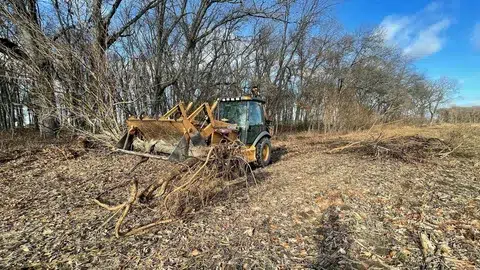
Howell Outdoor Services provides tree and vegetation management for residential and commercial properties across Southeast Alabama, Northwest Florida, and Southwest Georgia. The team handles limb removal, tree trimming, and deadwood removal using compact tool carriers that work well in tight spaces while limiting damage to surrounding lawns, fences, and structures. Howell Outdoor Services is licensed and insured, and every project starts with a free estimate so you know what to expect before any work begins.
Whether you are dealing with a single hanging branch or a yard covered in broken limbs after a storm, the crew can assess the damage, remove hazardous tree limbs, and clean up the debris so your property is safe again. If you are not sure whether a limb is something you can handle, a quick call is a smart first step. You can reach Howell Outdoor Services at (334) 479-2353 to schedule a visit and a free estimate.
Frequently Asked Questions
Can I remove storm-damaged limbs myself? Yes, if they are small, already on the ground, and nowhere near power lines or buildings. For anything large, high, or hanging, hire a professional.
What should I do first after a storm? Stay clear of damaged trees and power lines, and check for hanging limbs. Take photos of the damage for insurance, then decide what is safe to handle.
How do I know if a limb is hazardous? Look for cracks, hanging branches, leaning trees, missing bark, and limbs over roofs or driveways. If you are unsure, call a professional to assess it.
Is dead limb removal necessary if the tree looks healthy? Yes. Dead limbs are brittle and can fall without warning, even in light wind. Removing them early prevents damage and keeps the tree healthier.
How soon should I schedule professional limb removal? As soon as possible, especially for hanging or hazardous limbs. Howell Outdoor Services offers free estimates, and booking early helps avoid delays after a busy storm season.
Correct yard grading for drains can eliminate major structural water intrusion issues through the proper elevation of surface runoff, roof runoff, and saturated ground by leveraging the force of gravity.…
Fences and property boundaries help define outdoor spaces, protect property, and maintain clear separation between neighboring areas. However, when weeds, vines, shrubs, and unwanted trees begin growing along these boundaries,…
When most people hear professional landscaping, their first thought is usually “curb appeal.” And while a well-manicured lawn and vibrant flowerbeds certainly catch the eye, the value of professional landscaping…